



The Complete Guide to Caring for Your Gold Jewelry
The Complete Guide to Caring for Your Gold Jewelry
Gold jewelry is not fragile. It is forgiving, actually. But there is a small set of habits that separates pieces you wear for a season from pieces you wear for a decade, and most of them take less than thirty seconds a day.
We have been making all three tiers of gold jewelry at Bloom since 2021: gold-plated, vermeil, and 10k solid gold. Each tier has a slightly different care routine, and the care conversations we have with customers are almost always about the same handful of small things. This guide walks through all of them.
How do you clean gold jewelry at home?
To clean gold jewelry at home, wipe each piece with a soft lint-free cloth, then dip it briefly in lukewarm water with a tiny drop of gentle unscented soap, rinse with clean water, and dry immediately with a fresh cloth.
That is the whole method. It works for gold-plated, vermeil, and solid gold pieces, and it is the only cleaning routine most fine jewelry ever needs.
I get asked about gold care more than almost anything else, and the honest truth is that gentler is always better. The problems start when people reach for things that feel like they should work harder. Silver polish, baking soda paste, toothpaste, and ultrasonic cleaners all get recommended online. All four can quietly strip plating, scratch softer gold finishes, or loosen set stones. I have seen a two-month-old vermeil bracelet come back looking ten years old after one round with toothpaste.
The short version. Lukewarm water. A drop of gentle soap. A soft cloth. Dry right away. That is it.
What is the difference between gold-plated, vermeil, and solid gold?
Gold-plated is a thin layer of gold over a base metal like brass, vermeil is at least 2.5 microns of gold over sterling silver per FTC standards, and solid gold is gold alloy all the way through (usually 10k or 14k in fine jewelry).
This matters because longevity is tied to construction. Gold-plated pieces typically last one to two years with regular wear before the plating starts to show wear at high-friction points. Vermeil usually lasts two to five years with regular wear because the gold layer is thicker and the base metal is sterling silver, which is kinder to the finish. Solid gold, cared for reasonably, lasts a lifetime and then some.
At Bloom we sell all three tiers on purpose. Not everyone needs a solid gold piece for every occasion. A plated bracelet you adore and wear for a year is a good purchase. A vermeil ring you wear for four is a great one. A solid gold ring you pass down is in a different category entirely. The care routine you follow should match what you bought.
How do you care for gold-plated jewelry so it lasts longer?
To care for gold-plated jewelry, keep it as dry and chemical-free as possible and clean it only with a soft cloth or a very brief dip in mild soapy water.
The single biggest factor in how long a plated piece lasts is friction and moisture. Sweat, chlorine, salt water, perfume, sunscreen, hand sanitizer, and lotion are all accelerants. So is wearing a bracelet at the gym or in the shower. None of this is a flaw in the piece. It is chemistry. A thin layer of gold over brass simply cannot sit in chlorine for an hour and stay unchanged.
The rules I follow for plated care are simple. Put it on last, after perfume, lotion, and sunscreen have fully absorbed. Take it off before anything wet, including workouts. Wipe it down with a soft cloth at the end of the day to remove the film of skin oil and product that collects on everything you wear. Store it flat in a dust bag or a fabric-lined box, not thrown in a bowl with other pieces.
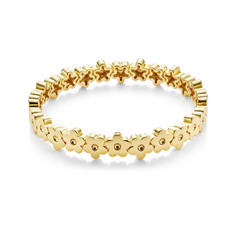
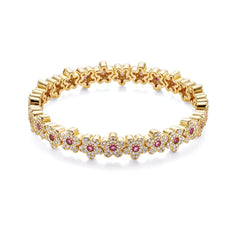
The Classic Flower Bracelet at $88 is one of our most-worn plated pieces, and customers who treat it this way get close to the full two-year window out of it.
How do you clean gold vermeil jewelry?
To clean gold vermeil jewelry, use lukewarm water, a drop of gentle soap, and a soft cloth, and dry it fully before putting it away, and never use silver polish (it will strip the gold layer off in one use).
Vermeil is the tier I personally wear most, and it is also the one where a small amount of care pays off the most. Because the gold layer is thicker than plating and the base is sterling silver, vermeil can handle light exposure better than plated pieces but still needs protection from the same short list of enemies: chlorine, salt water, perfume, lotion, and abrasive cleaners.
A weekly or monthly clean is enough for most people. Fill a small bowl with lukewarm (not hot) water. Add a single drop of unscented gentle dish soap or a soap made for fine jewelry. Dip the piece in, swish it gently for fifteen seconds, lift it out, rinse under clean lukewarm water, and pat it dry with a lint-free cloth. Let it air dry another ten minutes before storing.
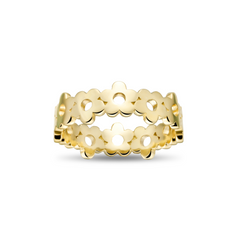
The Flower Ring in vermeil at $98 responds well to this routine and holds its finish beautifully when it is not worn to the pool.
How do you care for solid gold jewelry?
To care for solid gold jewelry, clean it the same way you would clean vermeil, but relax about everything else: solid gold can handle water, sweat, and daily wear without chipping, fading, or wearing away.
This is the tier where the care conversation becomes simpler and the storage conversation becomes more important. I still take solid gold off for the gym, not because it will be damaged by sweat, but because weights and bars scratch gold faster than anything else. I still take it off to sleep, because most accidental damage to fine jewelry happens in bed. And I always store solid gold pieces flat and separate, because gold against gold will scratch over time even in a soft pouch.
The Marie Ring at $260, our 10k solid gold piece, is a good example of what solid gold is for. You can wear it every day, wash your hands in it, swim in it if you want, and it will look the same in five years as it does the day you get it.
The only maintenance it really needs is an occasional soapy water rinse and a polish with a soft cloth. If a solid gold piece ever looks dull, that is almost always a film of skin oil and lotion, not the gold itself.
What should you never use to clean gold jewelry?
Never use silver polish, baking soda, toothpaste, bleach, ammonia, acetone, or ultrasonic cleaners on gold jewelry, and each one damages gold finishes in a different way that is usually permanent.
Silver polish contains chemicals specifically designed to strip tarnish off sterling, which also strips gold plating and vermeil layers. Baking soda and toothpaste are abrasives. They are marketed as gentle because they are gentle compared to sand, but they are coarse enough to scratch the soft surface of gold. Bleach and ammonia are household-strength chemicals that react with the alloy metals in gold and can leave pieces discolored or pitted. Acetone (nail polish remover) strips the protective coatings some pieces have. Ultrasonic cleaners shake loose stone settings and can crack softer gemstones like emerald, opal, and pearl.
The tools you actually want are boring. A lint-free microfiber cloth. A small soft brush (a clean, unused soft baby toothbrush works) for detailed pieces with engraving or pavé. A bowl of lukewarm water. A single drop of gentle unscented soap. That is a full gold jewelry cleaning kit.
When should you take off your gold jewelry?
Take off your gold jewelry before showering, swimming, sweating heavily, and before applying perfume, lotion, sunscreen, or hand sanitizer, and the habit of putting it on after everything else absorbs adds years to plated and vermeil pieces.
The rule I tell customers is last on, first off. Last thing you put on when you get dressed, first thing you take off when you get home. For plated pieces this is close to non-negotiable. For vermeil it is strongly recommended. For solid gold it is a preference, not a requirement, though you will still want to take it off for heavy workouts to avoid scratching.
The Pavé Flower (Emerald) bracelet at $128 is a good example of a piece where this matters on two levels. Pavé settings have small stones held in by tiny beads of metal, and harsh chemicals or knocks can loosen those over time. Treating pavé pieces gently is mostly about protecting the setting, not the gold itself.
How should you store gold jewelry?
Store gold jewelry flat, separated, and in a dry dark place, ideally a fabric-lined jewelry box with individual compartments or small soft pouches, so pieces do not touch each other and humidity stays away.
Three storage mistakes come up over and over. The first is the bowl on the dresser, where everything gets tangled and scratched against everything else. The second is the bathroom, where steam and humidity accelerate tarnish on anything with silver in it (including vermeil). The third is storing chains without laying them flat, which creates kinks that weaken the links over time.
My setup is simple. A lined tray for rings, with each one in its own slot. Small pouches for bracelets and necklaces, one piece per pouch, laid flat in a drawer. A separate zipped pouch in my bag for travel. Nothing lives in the bathroom. Nothing lives on top of something else. This is the part of jewelry care people skip, and it is the part that matters most over a five- or ten-year horizon.
What is the step-by-step for deep cleaning gold jewelry safely?
To deep clean gold jewelry safely, follow seven steps with lukewarm water and a drop of gentle soap in under five minutes per piece, and the method is safe for plated, vermeil, and solid gold.
1. Line a small bowl with a soft cloth so the piece does not clink against the bottom.
2. Fill the bowl with lukewarm water. Not hot. Heat can loosen adhesive on set stones.
3. Add one small drop of unscented gentle dish soap. Swirl to combine.
4. Lower the piece into the water and let it sit for thirty seconds. Do not soak longer than this, especially for plated pieces.
5. Gently work over any detailed areas with a soft clean brush. No scrubbing. Light strokes only.
6. Lift the piece out and rinse under a slow stream of clean lukewarm water.
7. Pat dry immediately with a lint-free cloth and let it air dry for ten minutes before storing.
Do this once a month for vermeil and solid gold, and only when visibly needed for plated pieces (a cloth wipe-down is usually enough for plated). If a piece ever looks worse after cleaning, stop and bring it to a jeweler.
Gentle soap, a soft cloth, and the discipline to put your pieces on last and take them off first. That is the whole formula for years of wear out of almost anything gold.

Frequently Asked


Recommended Reading


Join the Bloom Journal
Get expert styling tips, care guides, and first access to new collections delivered to your inbox.