



Gold Vermeil vs Solid Gold: The Honest Breakdown
Gold Vermeil vs Solid Gold: The Honest Breakdown
Every jewelry shopper hits this wall eventually. You are looking at two pieces you love. One says 'gold vermeil' at $128. One says '10k solid gold' at $260. You want to know what you are actually paying for.
I have spent four years designing both for Bloom, and the honest answer is neither one is a scam and neither one is universally better. They solve different problems. This is the breakdown I wish someone had given me when I started.
What is the difference between vermeil and solid gold?
Gold vermeil is sterling silver coated with at least 2.5 microns of 10k or higher gold. Solid gold is gold alloy all the way through the piece, with no base metal underneath.
That one structural difference is what drives the price gap, the lifespan, and who each tier is actually for.
Vermeil gives you the color, weight, and feel of real gold at a fraction of the price. Solid gold gives you a piece that will outlive you. Both are legitimate fine jewelry when made correctly. Neither is a scam. The question is just which one fits the way you actually wear jewelry, and the honest answer depends on your budget, your skin, and how often you take things off before the shower.
At Bloom we make both, and we sell both, because they solve different problems. This guide walks through every factor so you can decide with your eyes open.
What does gold vermeil actually mean?
Gold vermeil is a legally defined category in the United States, requiring a sterling silver base and a gold coating of at least 2.5 microns thick in 10k gold or higher per the Federal Trade Commission.
Anything thinner, or plated over brass or copper, cannot legally be called vermeil in the US market.
That 2.5 micron minimum is the number to remember. For comparison, standard gold plating can be as thin as 0.175 microns, which is why a plated piece can start showing wear in weeks while real vermeil lasts for years. Vermeil is roughly ten to fifteen times thicker than basic plating, and the sterling silver underneath is a precious metal in its own right, not a cheap filler.
You will sometimes see the word pronounced ver-may, which is the French origin. The technique itself dates back to 18th century France and was originally developed for royal tableware. It is not new, and it is not a marketing gimmick. It is a centuries-old method of making precious metal jewelry accessible.
What counts as solid gold?
Solid gold means the entire piece is made from a gold alloy, with no base metal core, and the karat number tells you how much of that alloy is pure gold (10k = 41.7%, 14k = 58.3%, 18k = 75%).
The rest of the alloy is usually copper, silver, or zinc, added for strength and color.
Pure 24k gold is too soft for everyday jewelry. It scratches if you look at it wrong. That is why fine jewelry is almost always alloyed. 10k is the most durable because it has the highest percentage of harder metals mixed in, which is why we chose it for our solid gold line at Bloom. It holds up to daily wear, it does not bend easily, and it is the most accessible entry point into true heirloom jewelry.
The important thing to understand is that solid gold does not tarnish, does not fade, and does not need replating, ever. The gold you buy is the gold you keep. If you scratch it, a jeweler can polish it. If you break a clasp, it can be repaired. The metal itself is the piece.
How long does gold vermeil last compared to solid gold?
Quality gold vermeil lasts two to five years of regular wear before it needs replating or retirement, while solid gold lasts a lifetime and beyond, which is why grandmothers pass it down.
The lifespan of vermeil depends almost entirely on how you treat it. Perfume, chlorine, sweat, lotion, and saltwater all accelerate wear on the gold layer. If you put your vermeil on last when you get dressed and take it off before the shower, you can stretch a piece well past the five year mark. If you sleep in it, swim in it, and spray perfume directly on it, you might see thinning in under a year.
Solid gold does not care about any of that. You can wear it in the ocean, in the shower, to the gym, and to bed. The metal is inert. The only thing that will ever happen to solid gold is surface scratching from daily life, which a quick polish restores. This is the single biggest lifestyle difference between the two tiers, and it is usually the factor that tips people one way or the other.
Vermeil vs solid gold: the side-by-side comparison
Here is the full breakdown in one table, showing every factor that matters for the decision: base metal, gold thickness, gold purity, price range at Bloom, lifespan, water-safety, tarnish risk, hypoallergenic rating, resizing, resale value, and best use case.
Gold Vermeil: sterling silver base with 2.5+ micron gold coating at 10k or higher. Bloom price range $68 to $220. Lifespan 2 to 5 years with care. Water-safe with caution. Low tarnish risk. Usually hypoallergenic. Limited resize options. Minimal resale value. Best for statement pieces, trend pieces, and gifts.
10k Solid Gold: gold throughout, no base metal, 41.7% pure gold alloy. Bloom price range $240 to $618. Lifespan: lifetime. Always water-safe. No tarnish risk. Fully hypoallergenic. Can be resized by a jeweler. Holds gold-market resale value. Best for daily wear, heirloom pieces, and engagement or wedding jewelry.
The tradeoff is clear. Vermeil wins on price and style flexibility. Solid gold wins on permanence and resale. Neither is objectively better. They are built for different jobs.
Is gold vermeil worth it, or should you save for solid gold?
Gold vermeil is worth it when you want the look and feel of real gold without the solid gold price, and solid gold is worth it when you want a piece you will wear every single day without thinking about it.
Both can be the right answer depending on the piece.
Think about how you wear jewelry. If you rotate between five pairs of earrings and love trying new shapes, vermeil is the smarter spend because you get more pieces for the same money, and most statement earrings live in a jewelry box more than on an ear. If you wear the same chain every day for a decade, solid gold pays for itself because you will not be replacing it or replating it, ever.
Most of our customers own both. They buy solid gold for the pieces they never take off, like a signet ring or a fine chain, and they buy vermeil for the pieces they rotate, like statement hoops or layering necklaces. That is the honest way to build a jewelry wardrobe on a real budget.
Will gold vermeil turn your skin green?
Real gold vermeil should not turn your skin green, because the base is sterling silver rather than copper or brass, and skin discoloration is almost always caused by copper in low-quality plated jewelry reacting with skin oils.
Vermeil by legal definition cannot contain a copper base.
Some people do get a gray or blackish mark from sterling silver if they have very acidic skin chemistry, but this is different from the green stain cheap jewelry leaves behind. It washes off, it is not an allergic reaction, and it usually fades as the piece develops a patina.
If you have had bad experiences with fashion jewelry and assumed all affordable gold jewelry was the same, vermeil is probably the category you were missing. It is specifically designed to solve the green-wrist problem.
Which Bloom pieces should you buy in vermeil, and which in solid gold?
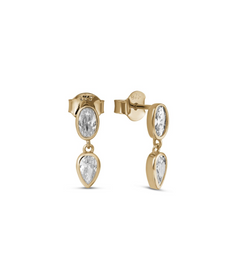
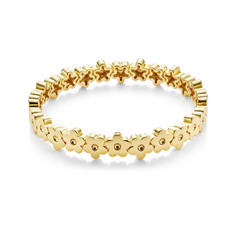
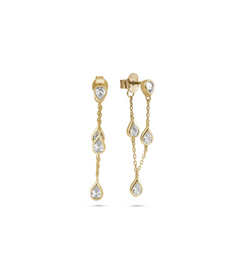
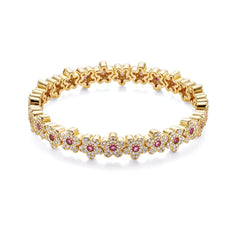
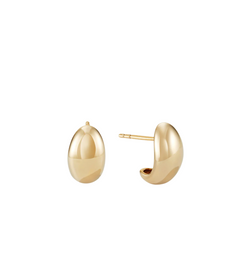
Buy vermeil when you want a piece that makes a visual statement (Brigitte Hoops $188, Amour Necklace $220, Audrey Earrings $128), and buy solid gold when you want a piece that disappears into your routine (The Marie Ring $260, Nora Necklace $240, Rope Chain $320).
That rule covers 90 percent of decisions.
Our vermeil pieces are designed for presence. The Brigitte Hoops, the Amour Necklace, the Audrey Earrings. These are pieces people notice and compliment. They come out for dinners, trips, and events. Vermeil is the right category for them because the wear cycle is occasional, and the price lets you own multiple statement pieces instead of one.
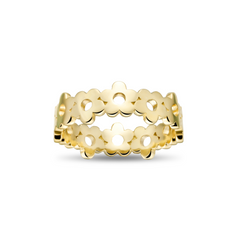
Our solid gold pieces are designed for permanence. The Marie Ring, the Nora Necklace, the Rope Chain. These are pieces you wear to sleep, to the gym, in the shower, for years. Solid gold is the right category because the cost per wear drops to almost nothing over a decade, and the piece becomes part of your body the way a wedding band does.
The mistake is buying the wrong tier for the wrong job. Solid gold statement earrings get worn twice a year and collect dust. Vermeil daily chains thin out in eighteen months and disappoint you. Match the metal to the frequency.
Vermeil for the statement pieces you rotate. Solid gold for the ones you never take off. Build from both, and you will never regret a purchase.

Frequently Asked


Join the Bloom Journal
Get expert styling tips, care guides, and first access to new collections delivered to your inbox.